
👋 Hi! I’m Claire Elise Thompson, an associate editor at Grist and the writer of the Looking Forward newsletter. Every week, Looking Forward brings you stories of what’s happening in the world of climate solutions, and how you can be a part of it.
No doom and gloom. No rose-colored glasses, either. Just reasons to believe that change is possible — and already underway.
Come join us!
Free. Weekly. From reporters you trust.
What you’ll get every week
Stories like this one:
- 📰 Reporting on climate action that’s already making a difference
- 🧠 Cultural insights that help explain how change happens
- ✨ Moments of imagination and creativity, including original fiction and reflections on the future
Plus:
- 🔗 Curated solutions news from Grist and the broader climate media ecosystem
- 🫂 And a community of other people who care about the planet and are grappling with how to take personal action (we even have a book club!)
Scroll to read Friday’s email:
👋 Hey there, everyone. In this week’s newsletter, we’re exploring how the city of Juneau, Alaska, equipped residents with vital information to understand — and prepare for — increasingly dangerous floods brought on by the melting glacier above the city. In a time of worsening extremes the world over, it’s a case study of how a community can actually come together to address a unique type of disaster that threatens it year after year.
We’ve also got news for you about solar power in Ukraine, roads in the Amazon, and worker protections in the houseplant industry.
This post originally appeared in Grist’s weekly solutions newsletter, Looking Forward. Not on our list yet? Subscribe here to get it in your inbox every Friday.
How Juneau, Alaska, is preparing for its next glacial flood
Marina Lopes
All over the world, communities are contending with increasingly intense — and increasingly frequent — extreme weather. In the aftermath of any disaster, it’s reasonable to ask: What can we do to prevent or prepare for the next one?
Grist asked that question recently about the catastrophic landslide in Nepal, triggered by glacial collapse. As my colleague Sachi Kitajima Mulkey reported, glacier instability on our warming planet is more than likely to cause similar tragedies in the future, and establishing early-warning systems for all of them is next to impossible.
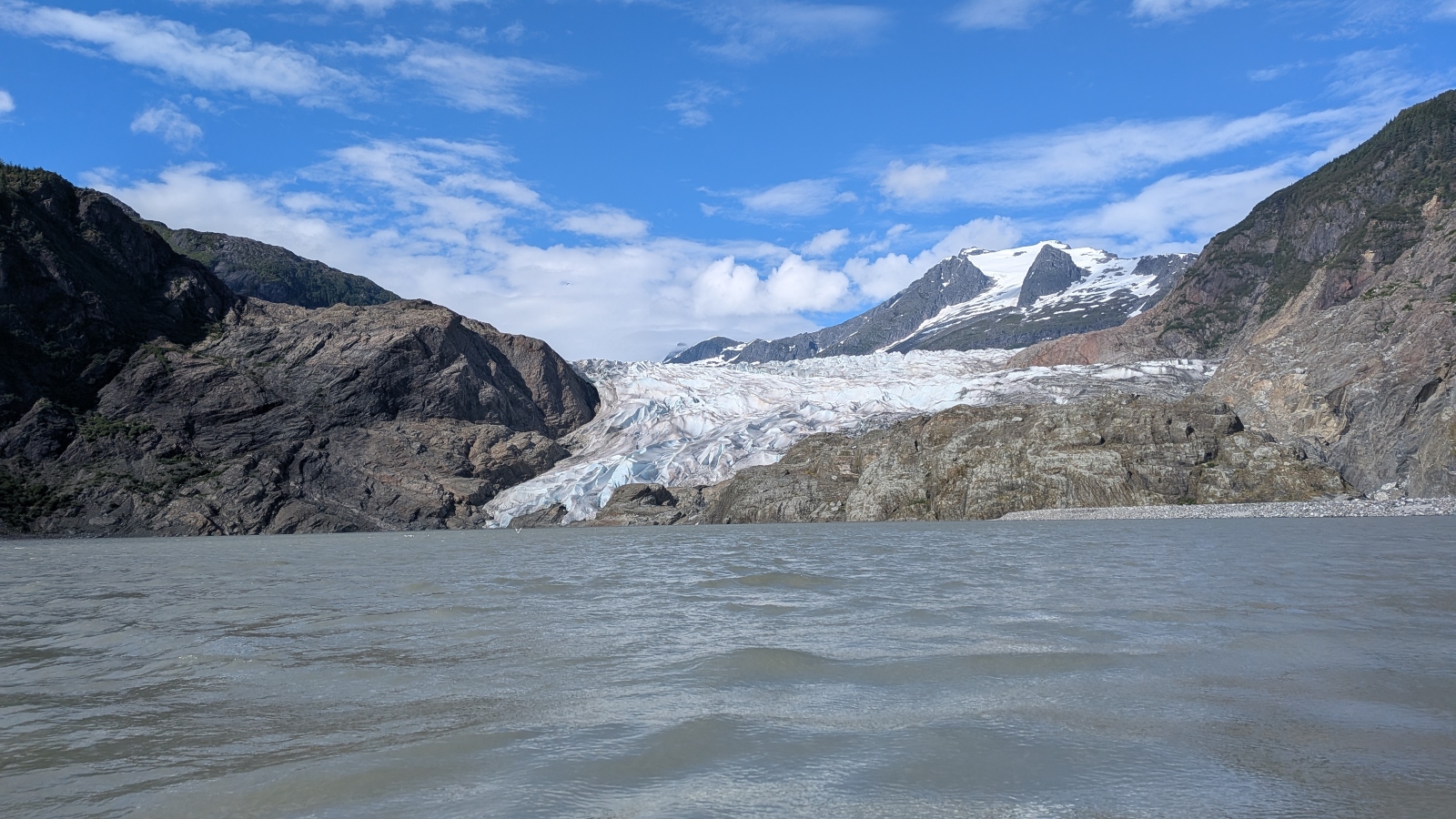
But in some places, communities have worked to create their own monitoring and warning systems. Sachi described one success story in the city of Juneau, Alaska’s remote capital, which is home to the Mendenhall Glacier and has flooded every year since 2011. Starting in 2023, those floods became more severe than anything the city’s residents could have anticipated, sweeping away houses and inundating yards as the Mendenhall River surged to nearly 15 feet. But even as the floods have worsened, they haven’t claimed any lives. In fact, the city has managed to adapt to protect residents and their homes.
In another story for Grist this week, freelance writer Marina Lopes explored how.
“The first time this happened in 2023, the city government was really at a loss of what to do,” Marina told me. They started at a logical place: Trying to understand the nature of the disaster. The flood prediction maps the city had from the National Weather Service didn’t come close to the reality of what Juneau experienced that year — so officials set about making their own. “It was a door-to-door effort where city officials were knocking on doors trying to determine, ‘How high did the water get in your home,’ and marking that out,” Marina said.
Meanwhile, scientists were deepening their understanding of the increasingly severe floods. The Mendenhall Valley’s annual floods are far more predictable than something like the Nepal disaster, which was triggered by the sudden collapse of a massive chunk of glacial ice that plunged thousands of feet to the river below. The Mendenhall’s cycle is what’s known as glacial outburst flooding. In the summer, the glacier’s basin fills up with meltwater and rain — how much depends on the conditions in a given year — while the glacier acts as a dam holding it in. As Marina described in her story, the accumulating water in the basin can actually lift up the ice, effectively breaking the dam and sending massive amounts of water into the river and down into the valley.
“What struck me about the story is this idea that it’s going to happen again and again and again,” Marina said. Residents, scientists, and city officials all knew that they’d be staring down the same threat next summer. “They had essentially 11 months before the next flood was going to hit.”
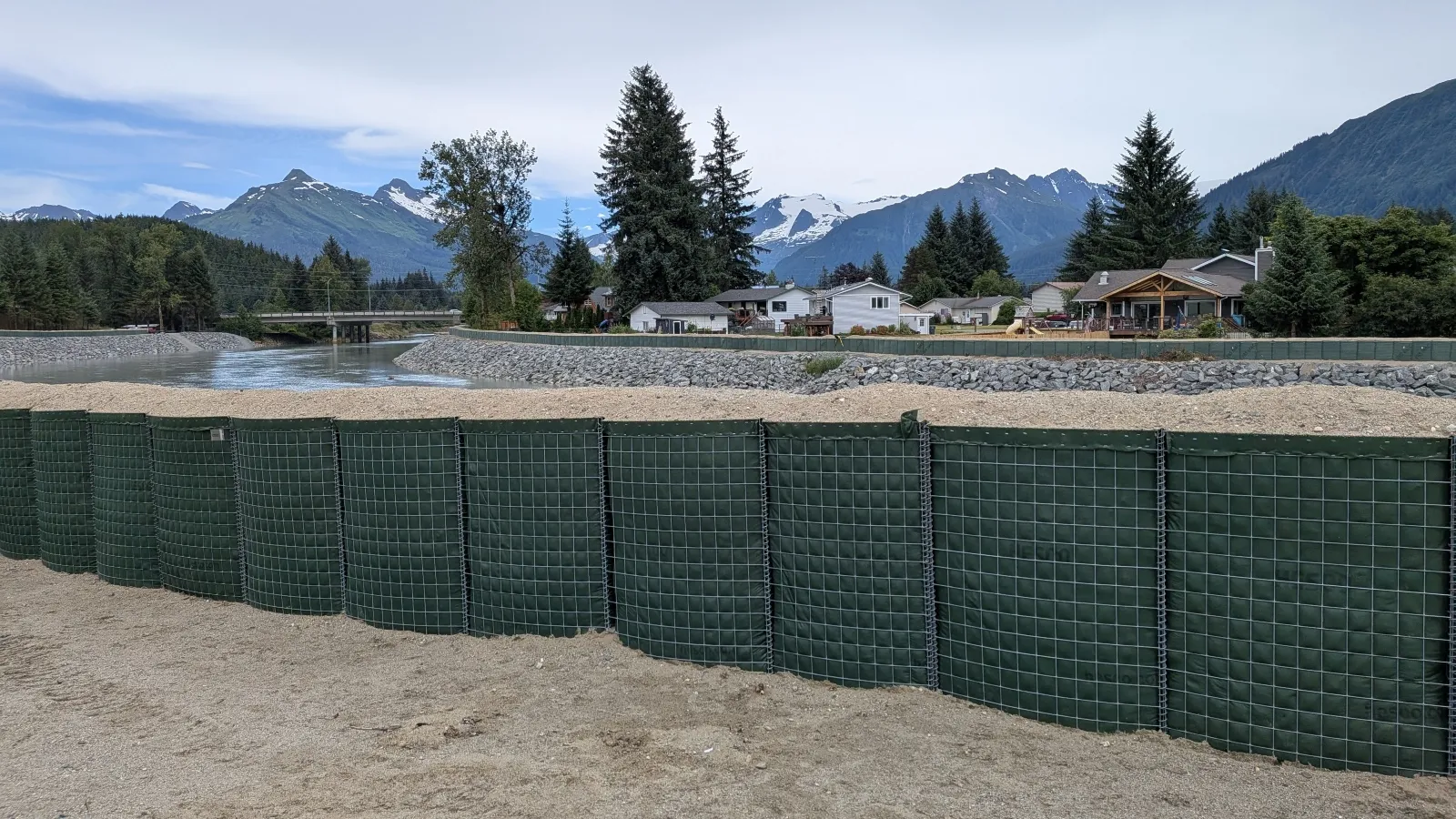
Barriers, installed by the city of Juneau with help from the U.S. Army Corps of Engineers, line the Mendenhall River to protect residential neighborhoods from recurring glacial floods. Marina Lopes
Working with scientists from the University of Alaska Southeast, the city took all of this information and put it into a sophisticated, publicly available dashboard, which includes background on how glacial outburst flooding works, real-time monitoring of the water level in the basin, and a map where residents can search for their own address to assess their risk.
Juneau launched its dashboard in 2024, Marina told me — and when the next flood did indeed arrive, the city’s maps were exceptionally accurate. Using their own maps to prepare, the city had also worked with the Army Corps of Engineers to build barriers around the river. “The water came within 1 inch of the top of the barrier,” Marina said. “That’s how accurate they were.”
The success of the forecasting — and the depth of science communicated through the dashboard — worked to build a lot of trust among residents. They can use the information for themselves to make decisions about when to evacuate, and whether to invest in measures like elevating their homes or digging moats. They can also see for themselves the basis of some of the city’s decisions — including, in some cases, river barriers being built within inches of their homes. “These are riverfront homes where people used to enjoy a beautiful river view, and now they have a barrier right next to their window,” Marina pointed out. Something that invasive could be hard to get buy-in for, if residents weren’t fully read in.
While some may disagree about what should be done to prepare for the next flood, the basic information about the flooding has never become politicized. And the scientists have made themselves available for conversations with the public — including standing-room-only lectures and Q&As.
“I spoke to so many people who said the scientists in this town are treated like rock stars,” Marina told me. “They are stopped on the street. People know their names, they know their research.”
There is a tension that comes with knowing that the floods will return, Marina said. She could feel it all over town. But Juneau’s residents also had something to grasp — they could pull up the dashboard on their phones, refresh it, and keep a close eye on the developing system.
“At a time when we’re dealing with so much climate skepticism,” she said, “so much misinformation, I thought this was a really fascinating approach to give science directly to the people and empower them in that way.”
Dive deeper:
- Juneau can’t stop the floods, but it’s learning to see them coming
- Why it’s so hard to predict a tragedy like Nepal’s glacier collapse
More from Grist
💡 Powering on
As the Russia-Ukraine war drags on through its fourth year, Ukrainians have dealt with rolling power outages — including in the brutal winter — as Russian strikes targeted the nation’s centralized energy grid. In efforts to build resilience, Ukrainians are increasingly turning to distributed solar arrays. Read more
🛣️ A rocky road
Brazil has plans to pave (or rather, re-pave) a road that connects the remote state of Amazonas with the rest of the country. Residents there see it as an economic necessity — but environmental advocates also fear it will open the door to deforestation that could have global climate consequences. Read more
🌱 Turning up the heat
Labor rights organizers are pushing for better heat protections for greenhouse workers in the houseplant industry. In a multistate action just after Labor Day, activists delivered petitions to nursery managers with Costa Farms, the biggest indoor houseplant producer in the world. Read more
In other news
- Global emissions are on track to fall slightly this year, due to the fuel crisis caused by the Strait of Hormuz closure (Carbon Brief)
- It’s been a record quiet hurricane season in the Atlantic so far, but experts warn that we’re not out of the woods (The New York Times)
- Meanwhile, in the Pacific, Hawaiian residents and officials discuss resilience measures after relentless storms (Honolulu Civil Beat)
- This Arizona medical examiner is at the forefront of tracking heat-related deaths — to better prevent them in the future (NPR)
- This week marked the 12th annual Latino Conservation Week, with a focus on protecting threatened public lands (Inside Climate News)
And finally, looking forward to …
… a more informed, more prepared, and more empowered future for all.
📱📱📱
Your daughter’s jaw drops and her eyes light up with pure excitement.
“Seriously — you’re going to let me have my own screen?”
You’re nervous, but you and your partner have decided. “Yes. But there’s one reason why — you’re old enough now that we want you to have the Enviro app. So you can check it for yourself.”
Of course, your daughter knows about the extreme weather threats that your city faces. She’s been at neighborhood meetings. She helped pack the go bag. But you want her to understand more of the science — and the app makes it all so easy.
— a drabble by Claire Elise Thompson
📱📱📱
A drabble is a 100-word piece of fiction — in this case, offering a tiny glimpse of what a clean, green, just future might look like. Want to try writing your own (and see it featured in a future newsletter)? We would love to hear from you! Please send us your visions for our climate future, in drabble form, at [email protected]
👋 See you next week!
From Grist
Looking Forward is produced by Grist Magazine, an award-winning, independent nonprofit newsroom that’s been on the climate beat for over 25 years.
Our reporters bring deep expertise across science, policy, culture, and community — and a shared belief that journalism should help people understand not just what’s going wrong, but what’s possible.
Ready to look forward?
Join thousands of readers who want climate news without despair, and inspiration grounded in reality.
